
Application and spraying

Why cutting in and edge banding decide how finished a job looks

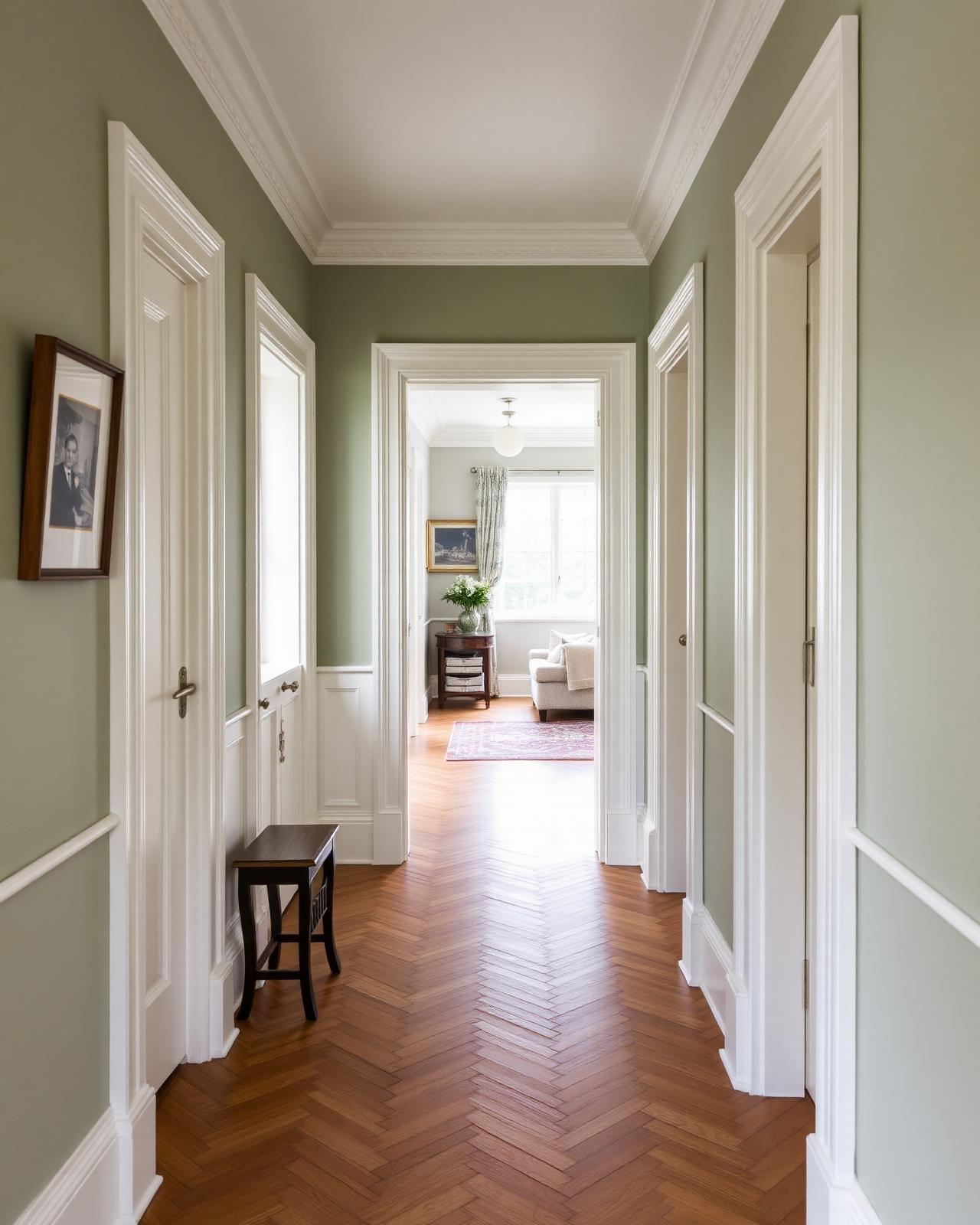
Decorator cutting in a crisp freehand line where a wall meets the ceiling.

Most of a room's flat wall area is forgiving — a slightly uneven roller pass rarely draws the eye. The line where wall meets ceiling, window frame or skirting is where the eye actually lands, and a wandering or feathered cut-in line is the single detail that most reliably makes an otherwise good paint job look amateur.

Questions we are asked about this

Is taping always more accurate than cutting in by hand?

Not always — on textured or slightly uneven junctions, a skilled freehand cut-in can actually be crisper than tape, which can bleed or lift on an imperfect surface.

Why does my previous paint job have a wobbly ceiling line?

Usually a mix of an unsteady hand, the wrong brush size for the detail, or paint applied too quickly without enough control at the edge.

Can you match new paint edges to existing colour blocks?

Yes, provided the existing edge is sound and clean — we assess the junction and choose tape or freehand cutting in based on what will give the crispest result.

Why cutting in freehand still matters

Tape gives a straight line but not always a crisp one, since paint can bleed under the edge or lift it away when removed, and taping every junction in a whole house adds significant time. A steady hand with a good quality angled brush, cutting a clean line by eye, is often faster overall and gives a sharper result on textured or slightly uneven junctions where tape struggles to seat properly.
Sharp painted edge along a taped colour block on a feature wall.

Where tape earns its place instead

On long, dead-straight architectural lines — a feature wall edge, a two-tone colour block, a sharp junction on new plasterboard — tape gives a level of precision that freehand cutting in cannot reliably match, provided it is applied to a clean, sound surface and sealed at the edge before painting to stop bleed.

  • Tape burnished down firmly to seal the edge before painting
  • A thin seal coat of the base colour run along the tape edge first
  • Tape removed at the right angle while paint is still slightly wet

Edge banding around fitted elements

Where a wall meets a kitchen worktop, a fitted wardrobe or a bath panel, the edge needs coating right up to the junction without paint creeping onto the fitted surface, which calls for a narrower brush and a slower, more deliberate pass than the open wall area. Rushing this junction is where paint most commonly ends up on tiles, worktops or flooring.

  • Narrow sash brush used for tight fitted junctions
  • Fitted surfaces masked even where cutting in by hand
  • Pace slowed deliberately at every fitted edge

Consistency across a whole property

On a multi-room job, keeping the cutting-in standard consistent from room to room — the same crispness at every ceiling line, the same care at every window reveal — is what makes a whole house read as one properly finished job rather than a collection of rooms of varying quality.

How we work on this

  • We choose freehand cutting in or tape based on the specific junction, not one method used throughout a job.
  • We seal taped edges with a thin coat of the base colour before the full coat to stop paint bleeding underneath.
  • We keep cutting-in standards consistent room to room so a whole property reads as one finished job.

Ask us to demonstrate a cut-in line on a discreet area before we commit to the whole room.

The cut-in line, not the flat wall, is what most people actually judge a finished paint job by.

Start your project

Planning a commercial painting or decorating project?

Speak to a Hampshire commercial decorating contractor that turns up, communicates clearly and delivers a finish that lasts.