
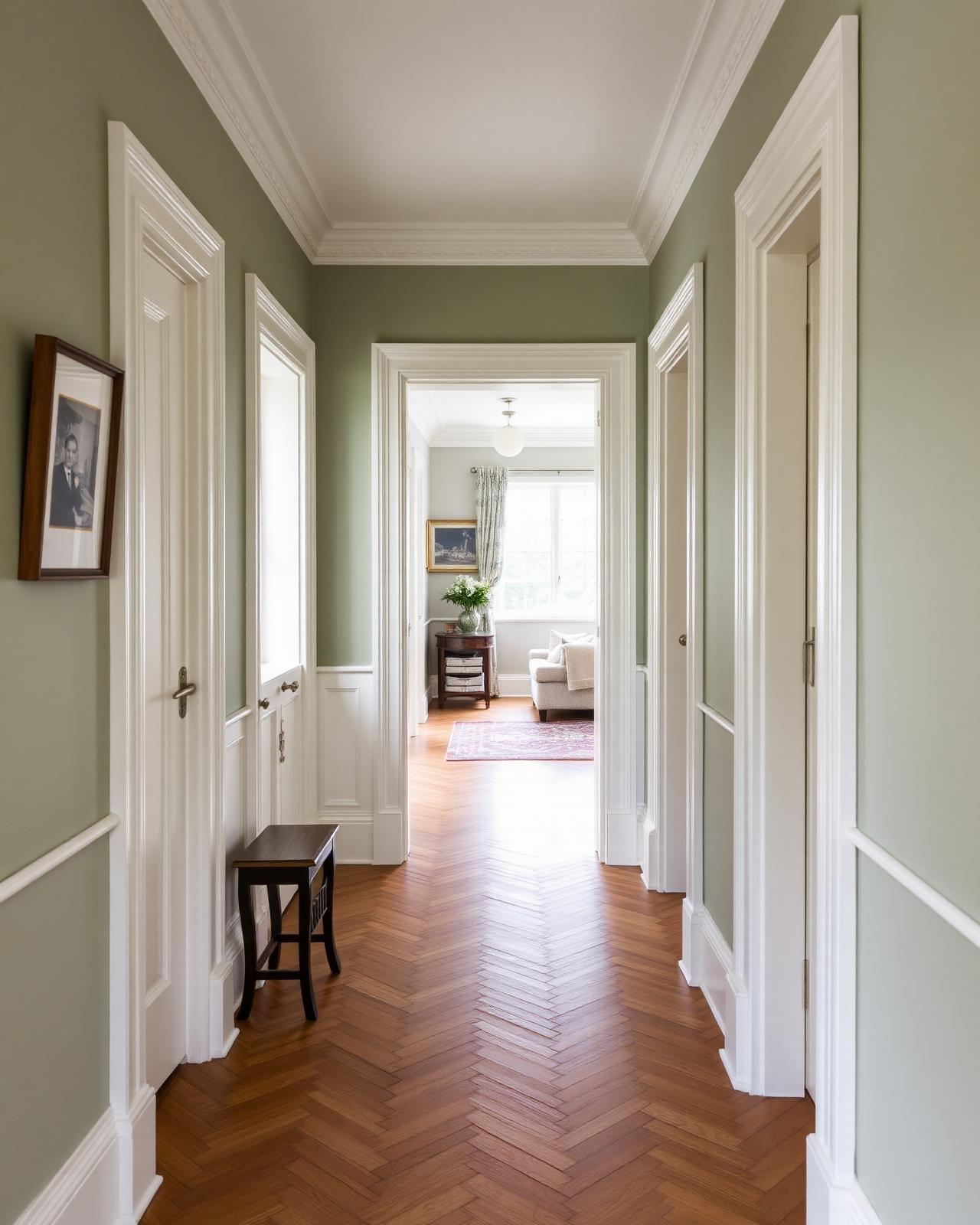
Colour, sheen and finish

Choosing a colour palette that suits a period property

Georgian reception room painted in a deep heritage green with white cornice detail

A heritage palette is about restraint and undertone as much as specific named colours. Historic paint ranges tend to sit in muted, earthy families rather than the brighter synthetic pigments common today, and understanding why helps a modern repaint feel genuinely in keeping.

Why historic colours read as muted rather than flat

Pigments available before modern synthetic dyes were mineral and earth-based, which naturally produced softer, slightly greyed tones rather than the very bright, clean colours modern pigments allow. A heritage palette borrows that muted character even when using a contemporary paint system rather than historic materials.
Matching colour depth to the room's original purpose

Grander rooms historically carried deeper, richer colours because pigment cost more and signalled status, while service areas and upper floors tended towards plainer, paler distempers. Reflecting that hierarchy through the house, rather than applying one palette uniformly, often looks more considered and more accurate to the period.

  • Reception rooms can carry deeper, richer heritage tones
  • Service and upper floor rooms often suit paler, plainer colours historically
  • Hallways and stairs were commonly kept practical and durable in tone

Where practicality overrides strict authenticity

Genuinely authentic distemper finishes are impractical for most modern households, being neither washable nor especially durable, so a heritage look is usually achieved using modern breathable paints tinted to a historically appropriate palette rather than the original material itself, unless a listed building consent specifically requires otherwise.

  • Modern breathable paints can achieve a heritage colour look practically
  • Check listed building consent requirements before assuming free choice
  • Balance authenticity against the household's actual daily use of the room

Questions we are asked about this

Do I need permission to use a heritage colour palette?

If the property is listed, consent may cover both material and colour, so it is worth checking before committing to a scheme; if it is not listed, the choice is generally yours to make.

Are heritage paint ranges more expensive?

Specialist heritage ranges often cost more per tin than mainstream paint, though the colour character can sometimes be approximated within a standard range if budget is a concern.

Can heritage colours work with modern furniture?

Yes, muted heritage tones tend to sit comfortably alongside a wide range of furniture styles, since their restrained character avoids clashing the way some brighter modern colours can.

A row of muted heritage colour paint tins beside a period panelled door

Tell us the age and listing status of your property and we will propose a period-appropriate palette to sample.

A convincing heritage palette relies on muted undertones and room hierarchy, achieved practically through modern breathable paint.

Start your project

Planning a commercial painting or decorating project?

Speak to a Hampshire commercial decorating contractor that turns up, communicates clearly and delivers a finish that lasts.