
Cost per square metre for commercial painting, explained
Facilities managers often ask for a rate per square metre because it looks like a clean way to compare contractors. In practice, commercial painting rarely reduces cleanly to one number, because prelims, access and occupancy usually cost more than the paint itself.
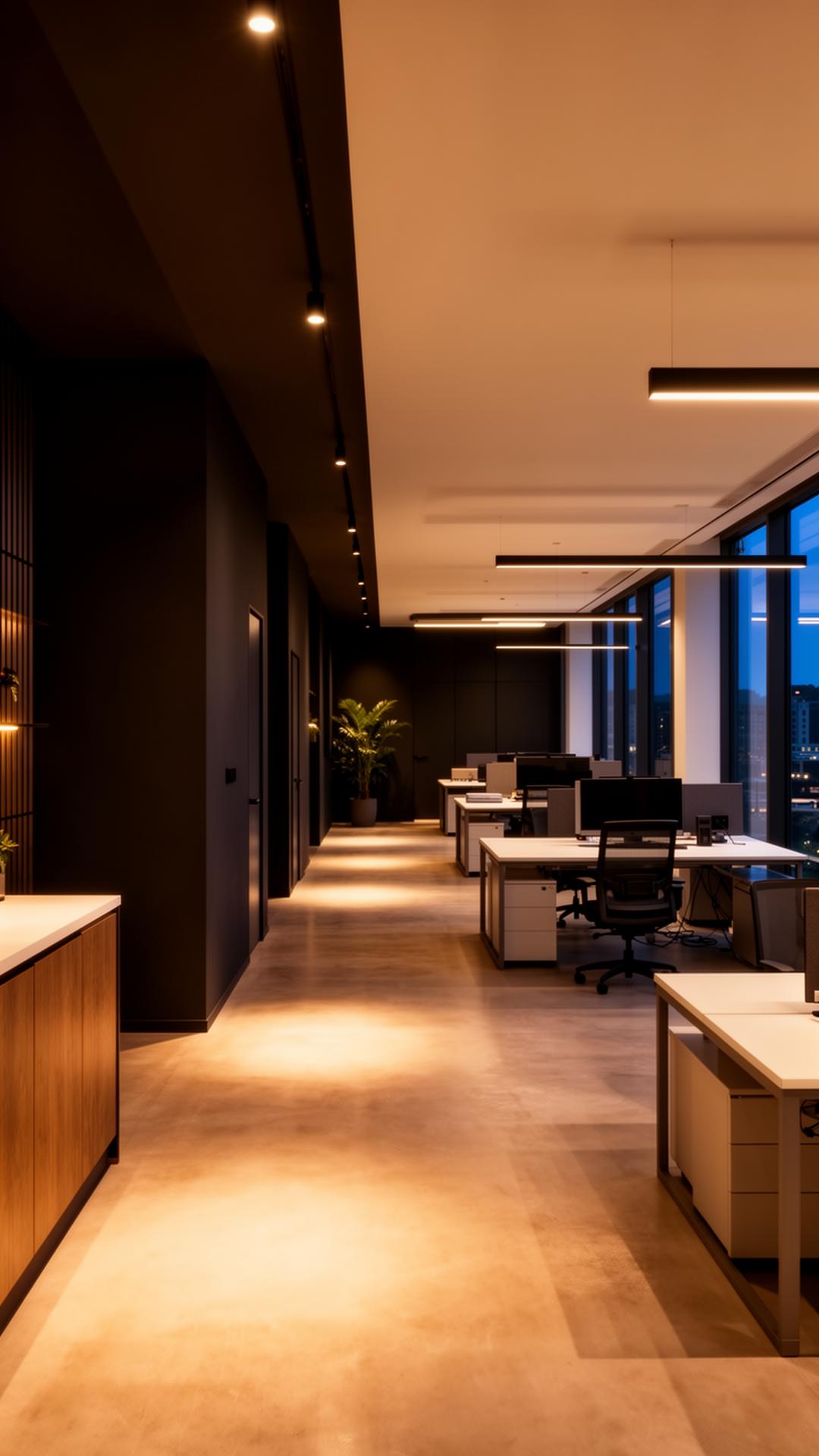
Rate per square metre versus lump sum
A rate per square metre works reasonably well for large, uninterrupted wall runs in straightforward conditions, such as a warehouse-style office floorplate with few obstructions. It works poorly for spaces full of doors, glazing, services and cut-ins, where the actual painted area is much smaller than the floor area suggests. Most contractors quote a lump sum built from measured areas plus separate allowances for prelims and access, which gives a more honest picture than a single blended rate.
What sits inside prelims
Prelims cover everything that supports the painting but isn't paint on a wall: site set-up, protection, signage, waste removal, supervision and site attendance. On a small domestic-scale job prelims are almost invisible, but on a multi-floor office or a phased retail unit they can be a significant proportion of the total cost. Any commercial quote worth comparing should show prelims as a separate line rather than folding them silently into a rate per square metre.
- Site set-up, protection and signage
- Supervision and site attendance
- Waste removal and materials handling
- Health and safety documentation and inductions
Access is usually the biggest swing factor
High-level ceilings, atria, stairwells and exterior elevations need towers, scaffold or mobile elevating platforms, and that equipment cost often exceeds the cost of the paint and labour combined on those areas. A rate per square metre that ignores access will look attractive until the actual site survey reveals a double-height reception or an external elevation that needs scaffold rather than a tower.
- Mobile towers for standard ceiling heights
- Scaffold for extended exterior or atrium work
- MEWPs where towers cannot be positioned
- Additional time for erecting and striking access equipment
Out of hours and occupancy premiums
Working evenings, nights or weekends around a trading shop, a live office or a clinical setting usually carries a premium over standard daytime rates, because crews work shorter productive windows with more daily set-up and clear-down. That premium is often worth paying, since closing a trading space to redecorate during the day usually costs the client more in lost trade than the premium itself.
Dilapidations and end of lease work
Dilapidations decorating is usually priced against a schedule of condition or a landlord's specification rather than a simple area rate, because the scope is fixed by what the lease requires, not by what the tenant would prefer. Getting a schedule of condition reviewed early avoids disputes about what constitutes fair wear and tear versus works chargeable to the outgoing tenant.
Coating system and specification affect the rate too
The same square metre of wall can be priced very differently depending on what is actually being applied to it. A single coat of standard trade emulsion over sound plaster costs far less to apply than a two-coat fire-retardant or anti-microbial system on a corridor wall, and specialist floor or steelwork coatings sit in a different pricing bracket again. Facilities managers comparing quotes should check that the coating system, number of coats and any specification requirements from a fire strategy or infection control policy are stated explicitly, because a low rate per square metre built around a thinner or cheaper system is not directly comparable to one built around a fuller specification.
Phasing across occupied floors
Multi-floor commercial buildings are rarely painted all at once. Work is usually phased floor by floor or zone by zone so the building stays operational, and that phasing itself carries a cost, since crews mobilise and demobilise access equipment and protection multiple times rather than once. A quote should state whether the price assumes continuous working across the whole building or a phased programme around occupied areas, since the two produce very different totals even for the same measured area.
- Phasing avoids closing the whole building at once
- Repeated mobilisation and protection adds cost per phase
- Out-of-hours work is often concentrated in occupied phases
- A clear phasing plan should be agreed before pricing
What an FM should ask for in a quote
Ask for measured areas broken down by space, a separate prelims figure, an explicit statement of access method and cost, and clarity on whether the quote assumes standard daytime working or includes an out-of-hours allowance. A quote that states all of this can be compared properly against another; a single blended rate per square metre usually cannot.
- Measured areas by room or zone, not just total floor area
- Prelims shown separately from painting cost
- Access method and cost stated explicitly
- Working hours assumption stated clearly
- Coating system and number of coats specified
Want a professional to handle it?
Need this done? Get a quote from Dynamic Decorating for commercial decorating.
Common questions
What is a typical rate per square metre for commercial painting?
Rates vary widely with access, occupancy and coating system, so any figure without a site survey should be treated as a rough indication only.
Is a lump sum quote more expensive than a rate per square metre?
Not usually, a well-built lump sum simply makes visible the costs that a blended rate can hide, such as access and prelims.
Do dilapidations jobs use a different pricing method?
Yes, they are usually priced against a schedule of condition or lease specification rather than a straightforward area rate.
Does out-of-hours working always cost more?
Generally yes, though it often avoids larger costs from lost trade or displaced staff during the day.
Why do measured areas matter more than floor area?
Floor area does not reflect how much wall surface actually needs painting once doors, glazing and services are excluded.
Can you provide a rate card for budgeting purposes?
We can give indicative figures for early budgeting, but a firm price always follows a site survey.
Related services
Covering Hampshire and the South Coast
Read next
Next step
Request a site survey and we will provide a measured, itemised quote with prelims and access shown separately.
Request a surveyPlanning a commercial painting or decorating project?
Speak to a Hampshire commercial decorating contractor that turns up, communicates clearly and delivers a finish that lasts.