
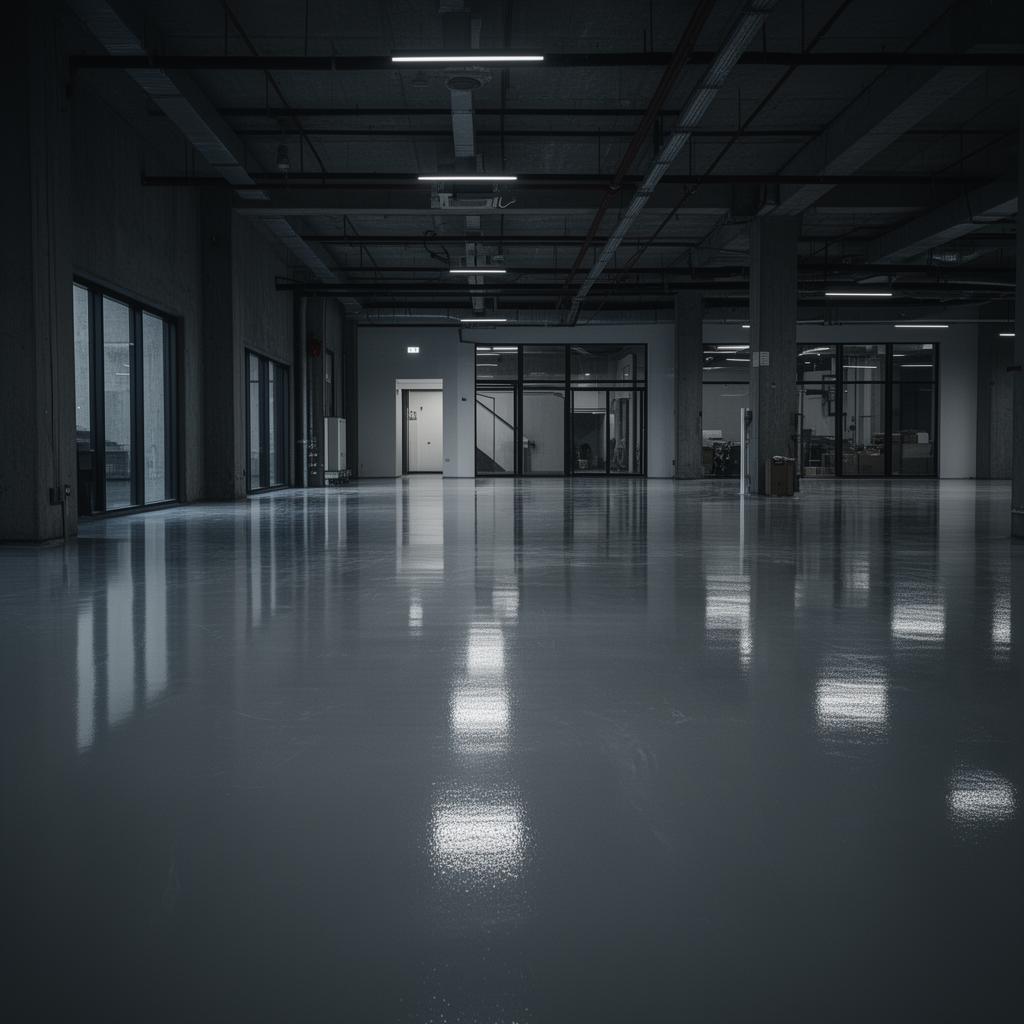
Epoxy floor painting
A painted concrete floor lasts as long as the bond underneath it. Epoxy floor painting gives workshops, commercial units, plant rooms and domestic garages a sealed, cleanable surface, but the preparation, moisture in the slab and the traffic the floor carries decide which coating is suitable and how long it will perform. Describe the floor and how it is used to discuss the right system.
What epoxy floor coating is suited to
Epoxy coatings cure into a hard, chemically resistant film that resists oil spots, spills and regular cleaning far better than ordinary floor paint. They suit workshops, service corridors, plant rooms, stores and commercial back-of-house areas where dust from bare concrete is a nuisance and a cleanable surface matters. Polyurethane topcoats are sometimes added where the floor sees sunlight or needs better scratch resistance.
A coating is not the same as resin flooring. Thick self-levelling resin screeds and heavy-duty systems are laid by specialist flooring installers and can correct uneven or damaged slabs. Epoxy floor painting applies a thinner protective coating to a sound floor. If the concrete is badly broken, crumbling or out of level, repair or a flooring specialist should come first.
Garage floor painting at home
Garage floor painting is the most common domestic version of the work. A sealed garage floor stops concrete dust being tracked into the house, makes oil drips easier to wipe up and brightens a dark space. Hot tyres can lift weak or poorly prepared coatings, so garage floors need the same careful preparation as commercial ones, and the car should stay off the floor until the coating has cured fully.
Older garage floors often carry years of oil, sealer or previous paint. Those layers have to be tested and, where they are loose or contaminated, removed. Painting over a dusty or oily slab is the usual reason a garage floor coating peels within months.
Preparation decides the result
Concrete is cleaned and degreased, then mechanically prepared, usually by grinding or shot blasting, to remove laitance and open the surface so the primer can key in. Cracks and holes are filled with a compatible repair product. New slabs need time to dry before coating, and a moisture check helps avoid blistering caused by damp rising through the floor.
Loose old coatings are removed rather than painted over. Expansion joints are respected and not bridged with rigid coating. Edges, upstands and drains are detailed carefully, because these are the places where cleaning water collects and coatings tend to fail first.
Anti-slip finishes and safety lines
A smooth epoxy finish can become slippery when wet. Anti-slip floor paint, or an aggregate broadcast into the coating, adds texture where spills, washing or wet footwear are likely. More grip makes a floor slightly harder to clean, so the level of texture is a balance between safety and maintenance and can vary between zones of the same floor.
Walkways, pedestrian routes, hazard edges and bay markings can be painted in contrasting colours as part of the same programme, using a coating compatible with the floor system so lines wear at a similar rate.
Programme, curing and what affects the cost
Most floor coatings need the area empty, ventilated and closed to traffic while each coat cures. Light foot traffic is often possible within a day or so, with vehicles and full use later, depending on the product and temperature. Cold floors slow curing considerably. In occupied buildings the floor can be coated in sections, out of hours or over a shutdown so part of the space stays in use.
The cost depends on the floor area, its condition, how much existing coating has to come off, the number of coats, anti-slip and line requirements, and when the work can be done. Photographs, approximate dimensions and a description of what uses the floor help produce a clear quote for the right system.
Related pages
Common questions
What is involved in epoxy floor painting?
The floor is cleaned, degreased and mechanically prepared, repairs are filled, then a primer and epoxy coats are applied, with anti-slip texture or line marking added where needed.
How long before the floor can be used?
It depends on the product and temperature. Light foot traffic is often possible within about a day, with vehicles and full use after a longer cure, and cold floors take longer.
Can you paint a garage floor that has oil stains?
Oil has to be removed or the coating will not bond. Heavy contamination may need repeated degreasing or grinding before the floor is suitable for coating.
What affects the cost of epoxy floor painting?
Floor area, condition, removal of old coatings, number of coats, anti-slip and line requirements, and whether the work must be phased or done out of hours.
Planning a commercial painting or decorating project?
Speak to a Hampshire commercial decorating contractor that turns up, communicates clearly and delivers a finish that lasts.