Floor coating systems for workshops and light industrial units
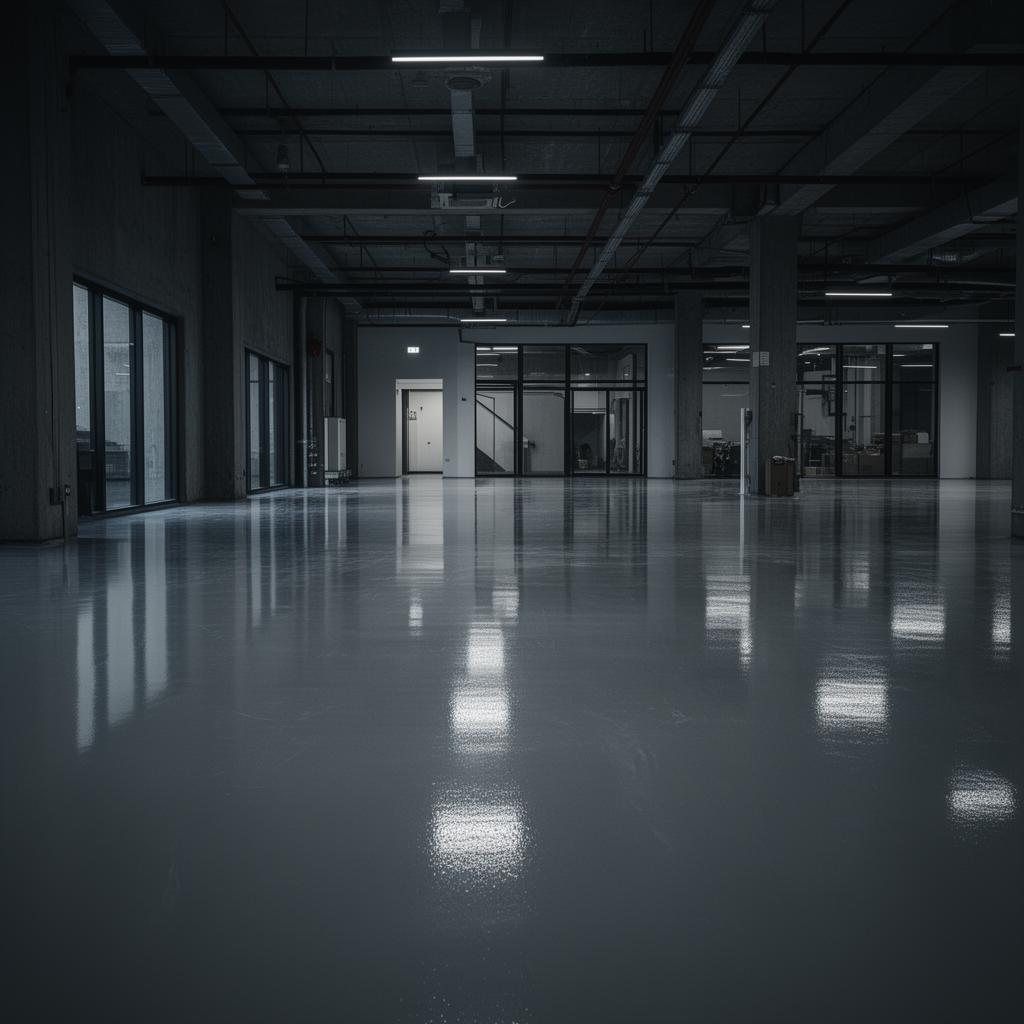
Floor coatings fail for two reasons: moisture coming up through the slab, and a surface that was never mechanically prepared. Product choice is the third question, not the first.
01Test the slab before specifying
Slabs without an effective damp-proof membrane push moisture into the coating interface and lift it. A relative-humidity test tells you whether a moisture-tolerant primer is needed.
02Preparation methods
Diamond grinding or shot blasting opens the surface and removes laitance and old contamination. Acid etching is a distant second best and rarely adequate for heavy-duty systems.
03Choosing the system
Single-pack acrylics suit light foot traffic and plant rooms. Two-pack epoxies handle forklift and workshop use. Polyurethane topcoats add UV stability and chemical resistance.
- Light traffic: single-pack floor paint
- Workshop and vehicle traffic: two-pack epoxy
- Chemical or UV exposure: polyurethane topcoat
04Line marking and safety
Walkways, bay markings and anti-slip aggregate are specified at the same time so they're built into the system rather than added over the top later.
Want a professional to handle it?
Need this done? Get a quote from Dynamic Decorating for specialist coatings.
Common questions
Why did my floor paint peel off in sheets?
Usually moisture in the slab or a surface that was cleaned rather than mechanically prepared.
How long does an epoxy floor take to cure?
Foot traffic comes first, vehicle traffic later, cure times vary by product and temperature.
Can you add anti-slip?
Yes, aggregate is broadcast into the coating to achieve the required slip resistance.
Do you do line marking?
Yes, walkways and bay markings are applied as part of the same system.
Related services
Covering Hampshire and the South Coast
Read next
Next step
Tell us the floor area and use pattern and we'll spec the right build-up.
Request a surveyPlanning a commercial painting or decorating project?
Speak to a Hampshire commercial decorating contractor that turns up, communicates clearly and delivers a finish that lasts.