Airless spraying, how it works and where it earns its keep
Airless spraying pumps paint at high pressure through a small tip rather than using compressed air to atomise it, which produces a fine, even film with none of the overspray fog associated with older air-assisted spray guns. It is not always the right tool, but on the right job it delivers a factory-flat finish and a level of coverage speed that brushing and rolling cannot match. Choosing between the two methods is a practical decision about the space, the finish required and how the building is used, not a question of which tool is inherently better.
How the process actually works
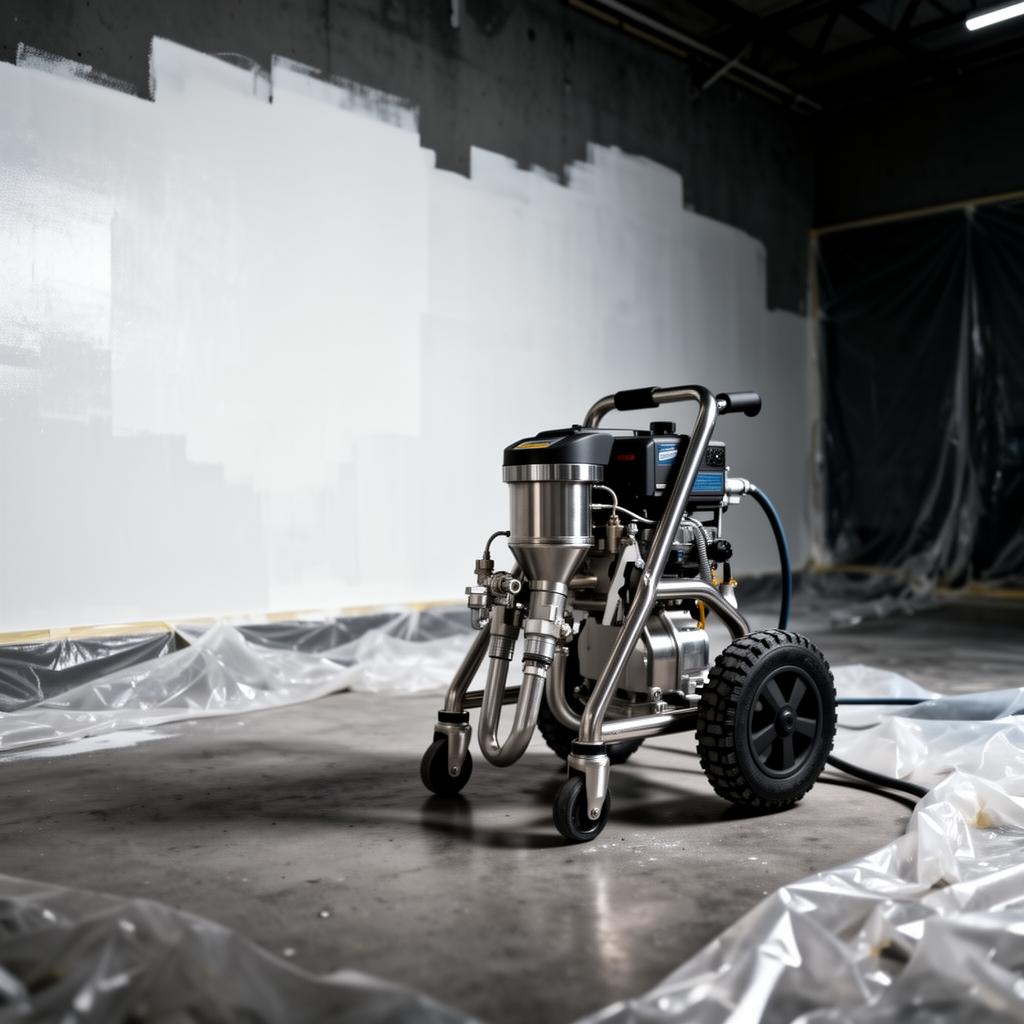
A pump pressurises paint to a level far higher than a hand pump sprayer, forcing it through a tiny tip opening that breaks it into a fine, controlled spray pattern rather than air atomising it. Because pressure rather than air does the atomising, the finish carries less of the stippled texture you get from air spray guns and lays down closer to a dip-coated, factory-style film.
- High-pressure pump forces paint through a small tip
- Tip size and fan pattern control the spray width and finish
- Minimal air mixing means less overspray fog than compressed-air spraying
- Works with a wide range of paints once thinned or specified correctly
Masking and containment come first
Spraying is only as good as the preparation around it, and that means masking, not painting. Every surface that is not being coated has to be protected with sheeting, tape and containment screens, and this masking stage often takes longer than the spraying itself on a fitted-out room.
Output versus preparation time
The appeal of spraying is speed of application on large or repetitive surfaces, but the total time on a job includes masking, spraying and any brush cutting-in still needed at edges. On a small, cluttered room, masking can eat up any time saved, which is why we weigh the whole job, not just the spray gun's output.
- Large open areas: spraying wins clearly on time
- Small, cluttered rooms: masking time can cancel the advantage
- Repetitive units, like doors or railings: spraying is consistently faster
- One-off detailed trim: brushing often remains competitive
Where spraying wins on finish quality
Ceilings, radiators, balustrades, staircases and joinery with a lot of moulding all benefit from spraying because it lays an even film into detail and corners that a brush or roller can struggle to reach evenly. It is also the standard method for achieving a smooth, factory-style finish on doors and kitchen cabinetry.
- Ceilings, for a flat, lap-mark-free finish
- Staircases, spindles and balustrades
- Multiple doors needing a consistent, smooth finish
- Kitchen cabinetry and fitted joinery
- Metal railings and pipework with complex profiles
Controlling overspray in occupied buildings
In occupied homes, shops and offices, overspray control is as important as the finish itself. We use containment screens, extraction where practical, and careful sequencing of work so that other trades, tenants or the public are not exposed to airborne paint. On live commercial sites, this often means spraying out of hours or in sealed-off zones.
When we recommend against spraying
We will not push spraying onto a job where the masking cost outweighs the benefit, where ventilation cannot be properly controlled, or where a client needs the space usable again within hours rather than allowing for full masking and clean-down. In those cases, brushing and rolling remain the sensible choice, and we say so plainly at survey stage rather than defaulting to whichever method is more convenient for us on the day.
Equipment and setup on site
A typical airless setup includes the pump unit, hose runs sized to the length of the job, and a selection of tip sizes chosen to match the paint viscosity and the surface being coated. Filters within the gun and hose need regular cleaning to avoid tip blockages and an inconsistent spray pattern, and pressure needs adjusting between products, since a thick masonry paint and a thin lacquer behave very differently through the same tip. None of this is visible in the finished result, but getting it wrong shows up immediately as tailing, spitting or an uneven film, which is why experienced operators matter as much as the equipment itself, and why we service and check tips, filters and hoses between jobs rather than treating them as fit-and-forget.
Want a professional to handle it?
Need this done? Get a quote from Dynamic Decorating for spray finishing.
Common questions
Is spraying always faster than brushing?
Not always. Spraying is fastest on large or repetitive areas, but the masking required can make it slower overall on small, cluttered rooms.
Does spraying use more paint than brushing?
It can, since some material is inevitably lost to atomisation and containment, but the finish quality and speed on the right job usually offsets this.
Can spraying be done in an occupied building?
Yes, with proper masking, containment screens and sequencing, though it is often planned around occupied hours or done in sealed-off zones.
What finish looks best sprayed rather than brushed?
Doors, cabinetry, staircases, railings and ceilings typically show the biggest visible improvement, since spraying avoids brush marks and lays an even film into detail.
Do you spray walls as well as joinery?
Walls can be sprayed, particularly on large commercial areas, but many domestic wall jobs are still rolled since masking a full room for wall spraying is rarely worth the time saved.
Is airless spray paint different from normal paint?
Often the same paint is used, sometimes thinned slightly to the manufacturer's spray guidance, rather than a separate spray-only product.
Related services
Covering Hampshire and the South Coast
Read next
Next step
Ask us for a survey and we'll tell you honestly whether spraying or brushing makes more sense for your job.
Request a surveyPlanning a commercial painting or decorating project?
Speak to a Hampshire commercial decorating contractor that turns up, communicates clearly and delivers a finish that lasts.