
Careful period-house repaint programmes in Chichester
Period homes across Chichester — the Victorian terraces of Westhampnett, the Edwardian villas around Lavant — need a different working approach to a modern estate house. Old plaster moves, lime-based substrates need breathable systems, and original mouldings deserve masking, not filling.
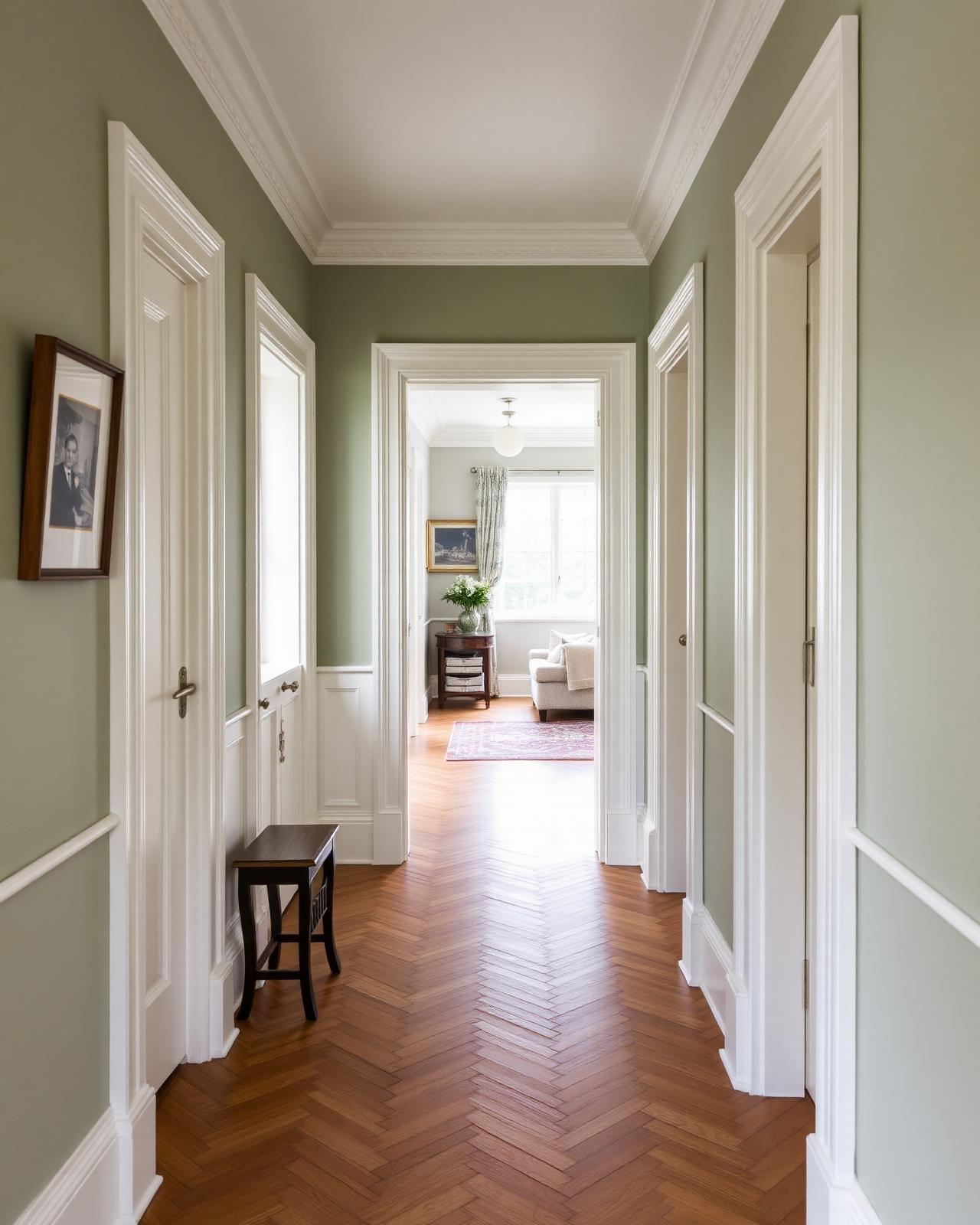
Track record on older stock
- Multi-phase programmes so families stay in-house
- Trusted with keys on unoccupied second-home projects
- Regular Victorian and Edwardian repaints across coastal and market towns
- Comfortable running breathable specs over lime substrates
Period projects hinge on substrate honesty and phasing. A single walk-round gives us both, and gives you a costed schedule to react to.
Details to settle at the survey
Original mouldings and features worth reviving rather than overpainting
Phasing so owners can stay in-house through the works
Colour research where a heritage palette is desired
Radiator, floor and skirting reveal after decades of paint build-up
Ventilation and drying times for older, less-ventilated rooms
Local character behind the spec
Conservation-area Georgian townhouses inside the city walls, flint farmhouses across the Manhood Peninsula, and modern executive developments around Westhampnett.
Audience: Owners of pre-1940s properties needing sympathetic full or partial repainting.
Coverage beyond the main postcode
City-centre conservation rules limit scaffold sizes and skip placement — we apply for permits via CDC before commencing.
- Lavant
- Bosham
- Fishbourne
- Funtington
- West Wittering
- East Wittering
How the substrate leads the spec
Common questions from period-home owners
How long does a whole-house period repaint take?
A three-bed Victorian semi typically runs 3–4 weeks including preparation and touch-ups. Larger Edwardian and Georgian homes phase over 5–8 weeks depending on ceiling heights and detail.
Do you work on the outside as well?
Yes — we run the exterior joinery and render as a separate weather-window phase, usually April–October, and dovetail it with interior work rather than blocking the whole programme on weather.
What about lead paint on the woodwork?
Pre-1970s joinery often carries lead-bearing paint. We test suspect layers and follow HSE-compliant removal — no dry sanding without extraction and containment.
Do you specialise in listed buildings?
Yes — we regularly work on Grade II and locally listed properties, using breathable systems and coordinating with the conservation officer when needed. We work from Southsea and cover Hampshire, Dorset and West Sussex daily — talk to us on 023 9355 3460 or send drawings and access dates via the contact form.
Continue planning the repaint
From walk-round to firm schedule
Period projects hinge on substrate honesty and phasing. A single walk-round gives us both, and gives you a costed schedule to react to.
Plan your Chichester heritage repaintPlanning a commercial painting or decorating project?
Speak to a Hampshire commercial decorating contractor that turns up, communicates clearly and delivers a finish that lasts.