
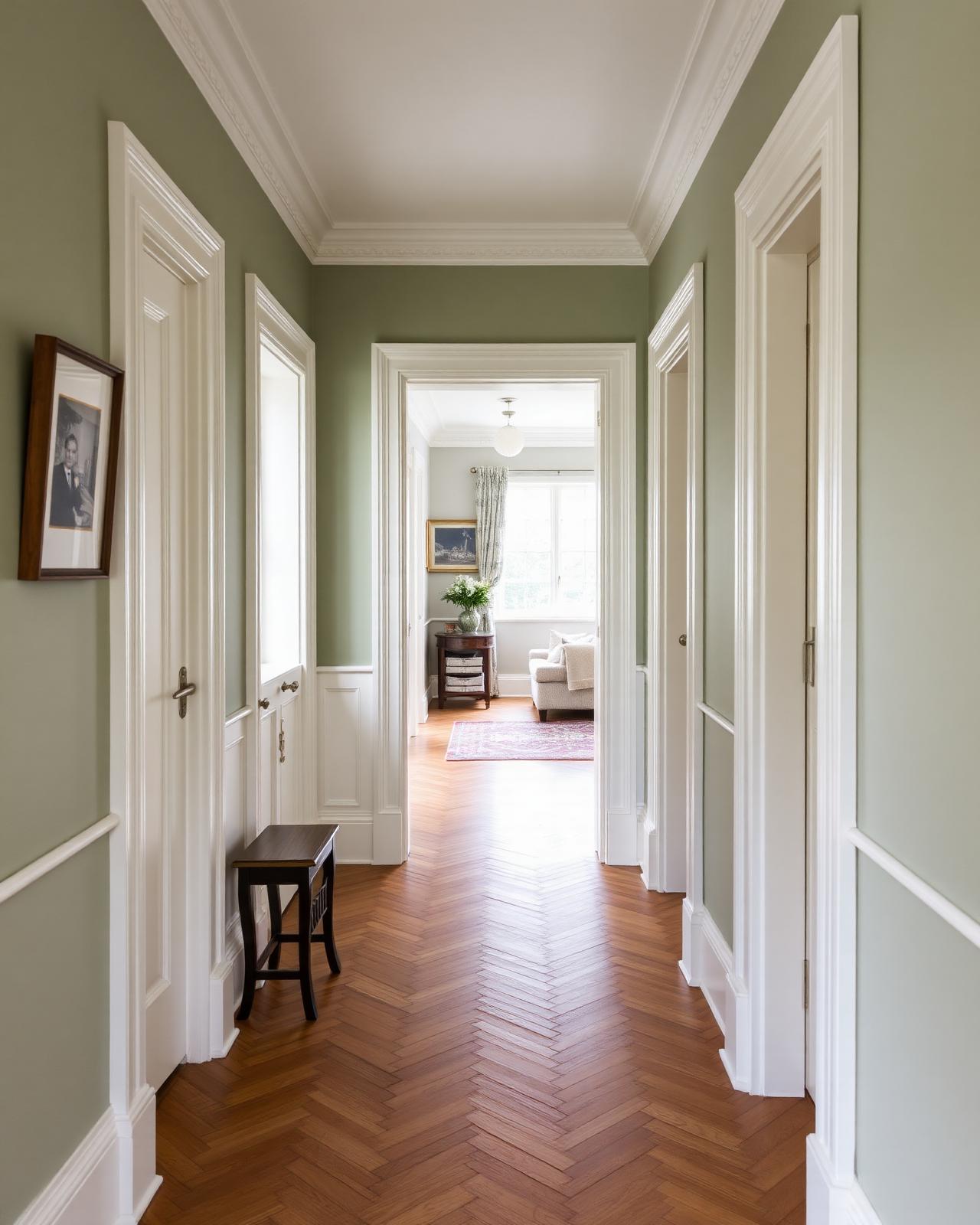
Coving installation
Coving softens the joint between wall and ceiling and gives a room a finished look. Coving installation covers fitting new coving where none exists, replacing damaged sections and repairing or matching existing cornice, all made good and left ready for painting. It is a natural part of a redecoration and is usually done before the walls and ceilings are painted.
Fitting new coving
New coving is fitted before decorating. The wall and ceiling lines are marked, the adhesive is applied to the back edges of each length, and the coving is pressed into place and supported while it sets. Internal and external corners are cut with mitres or pre-formed corner pieces, and joints between lengths are filled and sanded so they disappear once painted.
Modern coving comes in plaster, lightweight polyurethane and duropolymer. Lightweight profiles are quicker to handle and suit most rooms; plaster coving is heavier and more traditional, and suits period properties where a sharper, crisper detail matters. The profile is chosen to suit the room’s proportions: a large cornice can overwhelm a low ceiling, while a small one can look lost in a tall room.
- Profiles in plaster, polyurethane and duropolymer
- Mitred corners and filled joints
- Sized to suit ceiling height and room style
- Fitted before painting for a clean finish
Cornice repair and matching existing profiles
Cornice repair covers cracked, loose or damaged sections of existing coving and ceiling cornice. Small cracks and chips are filled and reshaped; sections that have come away from the wall or ceiling are re-bedded or replaced. Where a length is beyond repair, a matching profile is sourced, or a section is made up to match, so the repair does not stand out.
In older and period properties, original plaster cornice is worth keeping where possible. Damaged runs can often be repaired in place, and missing sections can be matched with a profile taken from the existing cornice. This keeps the character of the room and avoids the odd look of a modern profile butted up against an original one.
Removing old coving
Where old coving is being replaced, it is prised away from the wall and ceiling, and the old adhesive is scraped back. Removing coving almost always damages the plaster behind it to some degree, so the wall and ceiling are made good, filled and sanded before the new coving goes on. If the plan is to remove coving and leave a plain wall-ceiling joint, the making good is more involved, because the joint has to be finished to the same standard as the rest of the wall. Either way, the dust and debris are contained and cleared as part of the job.
Coving as part of a redecoration
Coving work sits naturally inside a wider decorating job. The usual sequence is to fit or repair the coving first, then paint the ceiling, then the coving and walls. Painting coving is fiddly by hand, and a steady cut-in line where the coving meets the wall makes the difference between a sharp finish and a wobbly one.
If you are planning a room or whole-house redecoration, it is worth deciding on coving at the start. Adding it after the walls are painted means touching up around every joint, so fitting it first keeps the finish clean and the programme simple.
What affects the cost
The cost depends on the length of coving to be fitted, the profile and material chosen, the number of corners, ceiling height and access, and how much repair or making good is needed first. A straightforward run in a modern room is a very different job from matching and repairing original cornice in a period property.
Send us the room measurements, the profile you have in mind or photographs of the existing cornice, and we will give you a written quote that sets out what is included, so the fitting and the decorating can be planned together.
Related pages
Common questions
What is involved in coving installation?
The wall and ceiling lines are marked, lengths are adhesive-fixed and mitred at the corners, joints are filled and sanded, and the coving is left ready for painting.
Can existing cornice be repaired rather than replaced?
Often, yes. Cracks and chips are filled and reshaped, loose sections are re-bedded, and missing lengths can be matched to the existing profile, which is usually worth doing in period properties.
Should coving be fitted before or after painting?
Before. Fitting first means joints and making good are painted over as part of the redecoration, giving a cleaner finish than adding coving to freshly painted walls.
What affects the cost of coving installation?
The length to be fitted, the profile and material, the number of corners, ceiling height and access, and any repair or making good needed first.
Can you match coving that is no longer made?
In many cases a close match can be sourced from specialist profile ranges, or a section can be made up to match the existing cornice so repairs blend in.
Planning a commercial painting or decorating project?
Speak to a Hampshire commercial decorating contractor that turns up, communicates clearly and delivers a finish that lasts.